The public and legislative consensus over artificial intelligence is shifting rapidly, delivering a definitive wake-up call for venture boards. As top-tier technology leaders issue unified warnings to pace development, a deeper commercial risk has surfaced. Amid an environment of algorithmic workflows and AI overload, organizations are struggling to clearly recognize and distinguish the true value represented.
For a venture capital or private equity board, this macro deadlock creates an immediate, uninsulated operational risk.
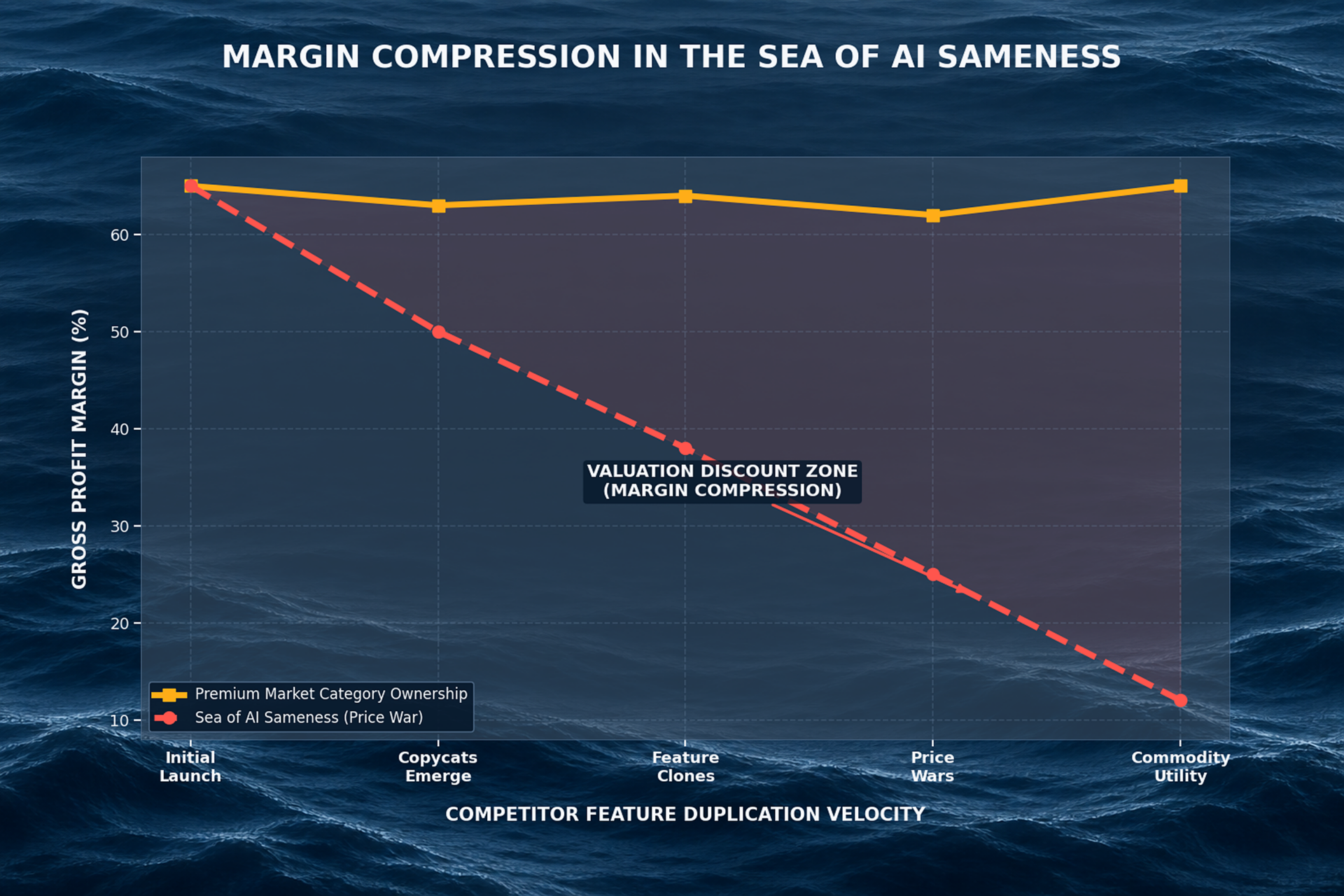
When a scaling technology product relies entirely on commoditized software agents to drive its market velocity, it creates a severe structural vulnerability. High-frequency automated loops easily erase the critical human layer required to anchor long-term enterprise trust. Without that layer, an organization is left completely exposed to a feature-cloning war that strips away its pricing power and compresses its gross margins.
True capital efficiency requires an immediate boardroom wake-up call to protect exit multiples across three distinct structural layers:
The Positioning Debt Trap
High-frequency automation easily masks underlying market vulnerabilities by forcing short-term transaction volume. But if the market recognizes your asset merely as a nice-to-have software tool rather than essential infrastructure, your enterprise sales cycles will stall out. Defensibility requires determining strict positioning boundaries that make low-cost copycats completely irrelevant from day one.
The Missing Trust Shell
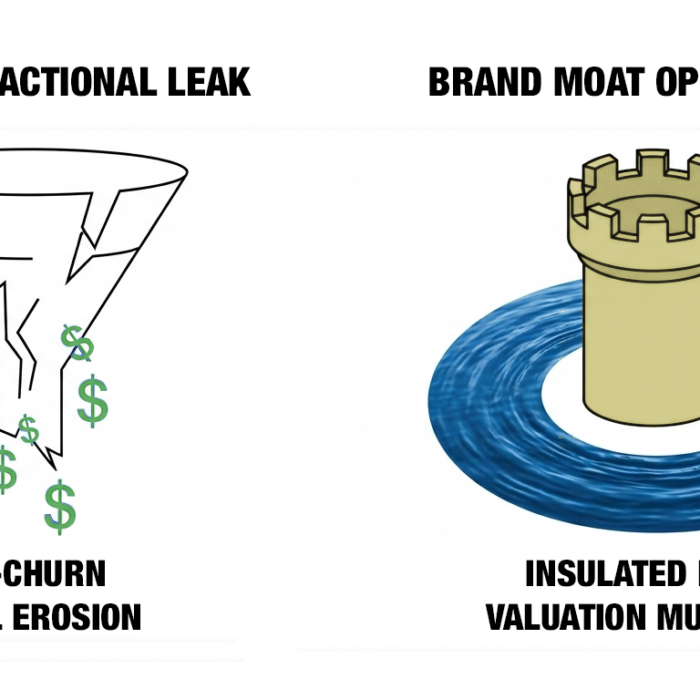
Automated scripts excel at transaction velocity, but they are completely incapable of engineering institutional security. Without an unshakeable human trust standard, user expectations shatter post-onboarding—triggering a severe customer churn crisis that institutional buyers spot instantly during due diligence and use to aggressively discount the deal.
The GTM Capital Efficiency Matrix
When analyzing portfolio risk, growth boards must evaluate how front-end positioning debt directly dictates these downstream financial metrics. The data reveals a stark division in resource allocation and asset defensibility across the software corridor:
The Uninsulated Commodity Product: Driven by over-optimized marketing automation and high-frequency process loops, these platforms face a brutal unit economic crunch. According to the latest data from the Benchmarkit SasS Metrics Database, the median New CAC Ratio has skyrocketed to $2.00, while fourth-quartile underperformers shell out a staggering $2.82 to acquire every single $1 of ARR Me The pipeline result is an enterprise sales cycle dragging out between 9 to 12 months due to stalled contracts, forcing the asset into a toxic price war that compresses net revenue retention down to a leaking 98% floor. [1, 2, 3, 4],
The Sustaining Premium Standard: By contrast, when rigid positioning boundaries and narrative armor are installed upfront, the financial return optimizes back toward an efficient baseline of $1.00 per dollar of expansion ARR. Sales cycles compress to under 90 days because category value is obvious to enterprise buyers, supporting an insulated retention moat that hits the top-quartile 113% NRR threshold validated by McKinsey & Company Analysis. [1, 2]
The Defensibility Verdict
Long-term asset value doesn’t belong to the fastest automated workflow; it belongs to the product that knows how to turn cold, robotic transactions into supporting sustaining quality relationships with a moat.
Before your next capital allocation review, ask your growth teams our two core advisory questions:
How Are You Being Recognized?
What Is Being Overlooked?
If your automated tools are evolving faster than your strategic clarity, you are burying your valuation multiple in a sea of sameness.